Dermal Fillers Under Eyes: What to Expect
Tired-looking eyes can change the whole face, even when you feel well rested. It is one of the most common concerns we hear from clients considering dermal fillers under eyes, especially when concealer starts to sit in hollows rather than brighten them. The under-eye area is delicate, highly visible, and often emotionally tied to how fresh, healthy, and confident you feel.
Treating this area well is not about chasing a dramatic change. In most cases, the goal is to soften shadowing, restore a smoother transition between the lower eyelid and the cheek, and keep the result natural. When approached carefully, under-eye filler can create a fresher appearance without making you look obviously treated. Just as importantly, it is not the right choice for everyone, and knowing that matters.
What are dermal fillers under eyes used for?
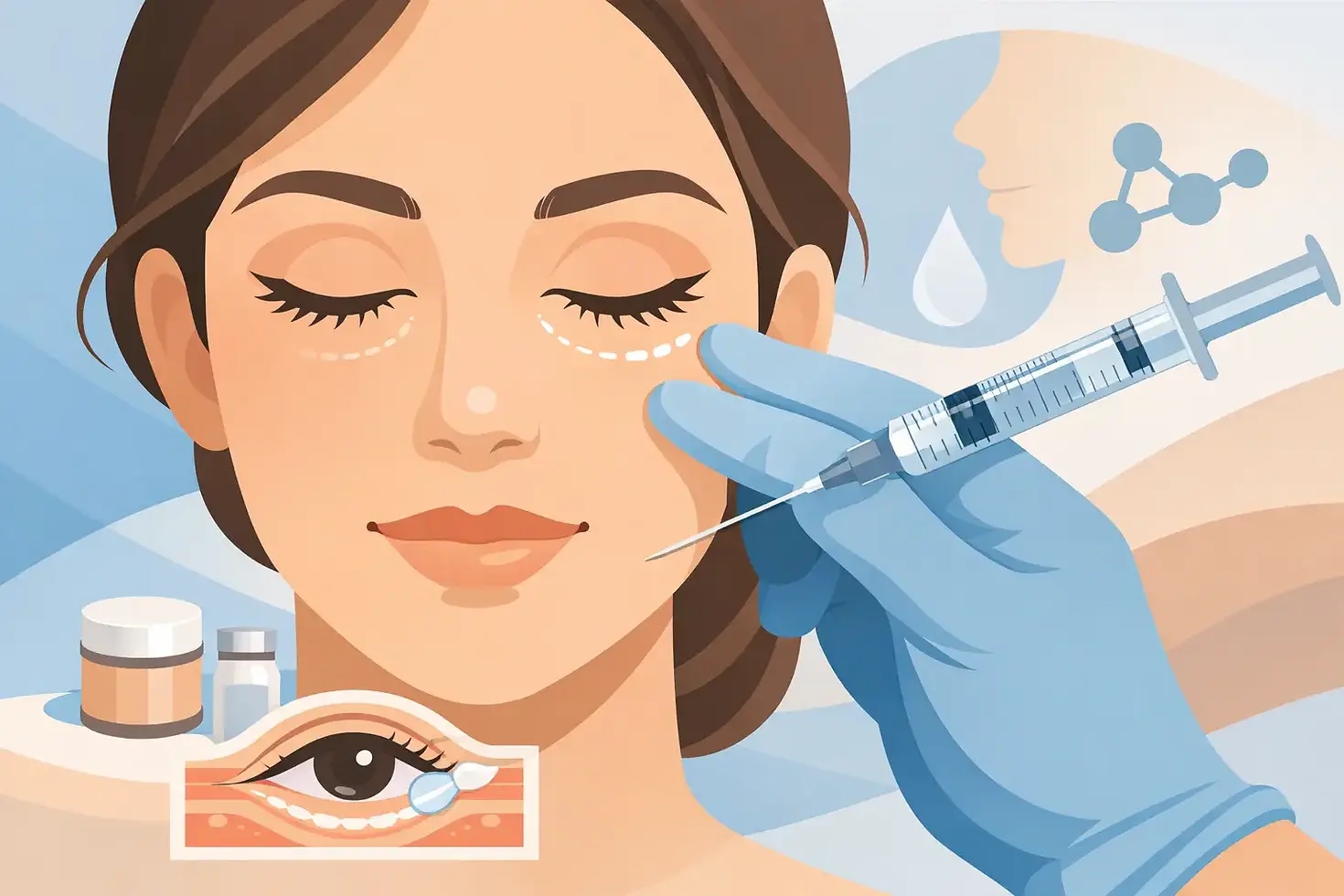
Dermal fillers under eyes are typically used to improve tear trough hollows. These are the indentations that run from the inner corner of the eye towards the upper cheek. When volume is lost in this area, or when facial structure naturally creates a deeper hollow, light hits the skin unevenly and can cast a darker shadow. That shadow is often mistaken for pigmentation or constant tiredness.
A carefully chosen hyaluronic acid filler can add subtle support beneath the skin, reducing the depth of the hollow and helping the area look smoother. The best results do not erase all movement or all contour. They simply reduce the contrast between the under-eye and cheek so the face appears brighter and more rested.
This treatment is most effective for volume loss and structural hollowing. It is less effective for loose skin, significant puffiness, prominent eye bags, or darkness caused mainly by pigmentation. That distinction is important because filler can improve the right concern beautifully, but it can disappoint when used for the wrong one.
Who is a good candidate for under-eye filler?
The right candidate usually has a genuine hollow beneath the eye, good skin quality, and realistic expectations. Some clients are younger and have always had a tear trough due to genetics. Others notice the area becoming more pronounced with age as mid-face support reduces and the under-eye-cheek junction becomes more visible.
If the main issue is a hollow that creates shadowing, filler may help. If the main issue is swelling, skin laxity, or a fatty under-eye bag, another treatment plan may be more appropriate. In some cases, the best decision is to treat the cheek first, because restoring support in the mid-face can improve the under-eye area indirectly and more elegantly.
A thorough consultation should always come first. This area requires a conservative, tailored approach, and a good practitioner will tell you when treatment is suitable, when it is not, and when a different option may give you a safer or more flattering result.
When dermal fillers under eyes may not be the best option
This is one of the most technically sensitive filler areas on the face. That does not mean it should be feared, but it does mean it should never be rushed.
If you have significant under-eye bags, poor skin elasticity, fluid retention, or very thin skin, filler may not sit as well as you hope. In these cases, product can sometimes draw water, create heaviness, or make the area look fuller in the wrong way. Clients are often surprised to learn that more filler is not the answer to every under-eye concern.
Lifestyle and anatomy also play a part. Allergies, sinus congestion, irregular sleep, dehydration, and natural facial asymmetry can all affect how the under-eye area looks day to day. A good treatment plan takes these factors seriously rather than promising a one-size-fits-all fix.
What happens during treatment?
Treatment starts with assessment, not injection. Your practitioner should examine the under-eye area from multiple angles, look at your facial balance, review your medical history, and discuss what is realistically achievable. Photographs may be taken so subtle changes can be properly assessed.
On the day, the area is cleansed and marked. A small amount of filler is then placed with great care, often using a cannula or needle depending on the technique and anatomy. The amount used is typically quite small. Under-eye filler is not a treatment where more tends to mean better. In fact, restraint usually produces the most refined result.
Most clients find the treatment manageable. You may feel pressure, slight stinging, or mild discomfort, but it is generally quick. Once placed, the filler may be gently moulded to ensure a smooth finish. The immediate area can look slightly improved straight away, though final results are better judged after any initial swelling has settled.
What kind of result should you expect?
The best under-eye filler result is subtle. Friends may say you look fresher, less tired, or generally well, without being able to pinpoint exactly why. That is usually the aim.
You should not expect perfectly blank, airbrushed skin. The under-eye area still moves, reflects light differently, and has naturally fine tissue. What treatment can do is soften hollowness and improve the transition from lid to cheek. For many clients, that makes make-up sit better and reduces the need to constantly correct darkness with concealer.
Results vary depending on anatomy, metabolism, product choice, and whether the under-eye is treated alone or as part of a wider facial balancing plan. Some clients need only a small correction. Others benefit more from a staged approach.
Recovery, aftercare, and how long it lasts
Downtime is usually limited, but this is still an injectable treatment and some temporary side effects are normal. Mild swelling, tenderness, redness, and bruising can occur, particularly in such a delicate area. Some clients are comfortable returning to normal activities quickly, while others prefer a little social downtime if bruising appears.
You will usually be advised to avoid strenuous exercise, excess heat, alcohol, and pressure on the area for a short period after treatment. Following aftercare properly helps support the best possible outcome.
How long under-eye filler lasts depends on the product used and your individual metabolism, but results often remain visible for many months. That said, longevity should never be the main focus. Precision, product suitability, and natural integration matter far more than trying to make filler last as long as possible.
Risks and why practitioner choice matters
Every injectable treatment carries risk, and the under-eye area deserves particular respect. Possible issues include bruising, swelling, asymmetry, lumpiness, product visibility, prolonged puffiness, and dissatisfaction with the cosmetic result. More serious complications, while uncommon, are the reason this treatment should only be carried out by a trained and insured practitioner with strong anatomical knowledge.
Experience matters because this area is not just about placing filler. It is about patient selection, product choice, depth, quantity, and knowing when not to treat. A careful practitioner will be conservative, honest, and focused on safety first.
For clients in Tunbridge Wells and the surrounding area, that often means looking beyond price alone. Under-eye filler is not the treatment to choose on convenience or a rushed deal. The quality of assessment is just as important as the injection itself.
Are there alternatives to under-eye filler?
Yes, and sometimes they are the better route. If darkness is caused by pigmentation, skincare and skin-focused treatments may be more suitable. If the issue is cheek volume loss, adding support higher in the mid-face can improve the under-eye indirectly. If puffiness or eye bags are the dominant concern, filler may not be the right answer at all.
Some clients also benefit from a broader rejuvenation plan rather than focusing on one area in isolation. Skin quality, hydration, lifestyle, and facial balance all influence how rested the eyes look. At Faeger Aesthetics, that wider view is part of creating results that still look like you, only fresher and more confident.
The value of a personalised consultation
Under-eye concerns are rarely identical from one client to the next. Two people can describe the same problem as dark circles, yet one may have a hollow tear trough, another may have pigmentation, and another may have under-eye bags that need a completely different approach.
That is why consultation matters so much. It gives you space to understand what is actually causing the concern, whether filler is likely to help, and what a sensible treatment plan would look like for your face. It should feel clear, reassuring, and honest - never pressured.
If you are considering this treatment, the most useful starting point is not deciding whether you want filler. It is understanding what your under-eye area truly needs. The right plan should leave you looking brighter, balanced, and still entirely yourself.


Comments