Laser Hair Removal for Dark Hair That Works
Dark, visible regrowth can make shaving, waxing and plucking feel like a constant part of your routine. The good news is that laser hair removal for dark hair is often one of the most effective treatment options available, because the laser is designed to target pigment within the hair follicle.
That does not mean every device, setting or treatment plan will be right for every client. Achieving smooth, long-lasting reduction safely depends on the contrast between your hair and skin, the type of laser used and an assessment that puts your skin health first.
Why dark hair responds well to laser treatment
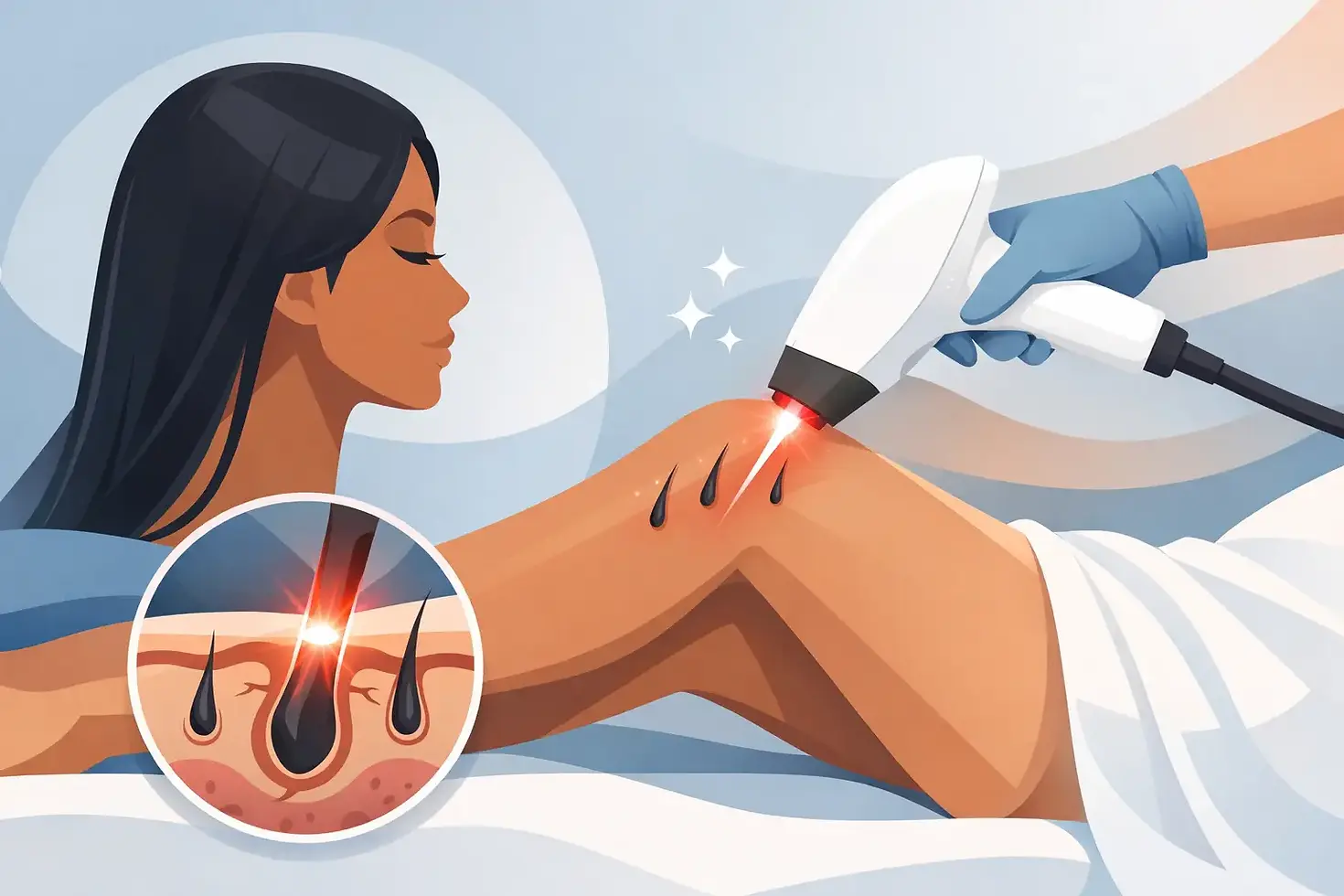
Laser hair removal works by directing controlled light energy towards melanin, the pigment that gives hair its colour. Darker hairs usually contain more melanin than fair, grey, white or red hairs. This gives the laser a clearer target, allowing heat to travel down the hair shaft and disrupt the follicle responsible for future growth.
For many clients, coarse dark hair on areas such as the underarms, bikini line, legs, face or back can respond particularly well. Over a course of treatments, hair often grows back more slowly, finer and less densely. Some follicles may stop producing visible hair altogether.
Results are not immediate after one appointment. Hair grows in cycles, and laser treatment is most effective when a hair is in its active growth phase. As only a proportion of hairs are in that phase at any one time, a course of appointments spaced several weeks apart is needed to treat the area properly.
Laser hair removal for dark hair and dark skin
Dark hair is a positive factor for laser treatment, but hair colour is only one part of the picture. Your skin tone matters just as much when choosing the right technology and treatment settings.
If the skin also contains higher levels of melanin, the practitioner needs to take additional care. A laser that is too aggressive or poorly suited to the skin can heat pigment in the surrounding skin as well as the hair follicle. This may increase the risk of irritation, burns or temporary changes in pigmentation.
A professional consultation should always establish your Fitzpatrick skin type, examine the treatment area and discuss your medical history before treatment begins. A patch test is an essential part of this process. It helps assess how your skin responds and allows settings to be selected with safety and comfort in mind.
Which laser is best?
There is no single best laser for everyone. The most appropriate choice depends on your individual hair and skin combination.
Alexandrite lasers can be highly effective for clients with dark hair and lighter skin tones, while diode lasers can offer excellent results across a wider range of skin types when used correctly. Nd:YAG lasers are often considered the safer option for deeper skin tones because their wavelength is less readily absorbed by melanin in the skin, allowing the energy to reach the follicle more selectively.
The quality of the machine matters, but expertise matters too. Safe treatment is not simply about using a laser labelled as suitable for your skin type. It is about selecting the right wavelength, pulse duration, energy level and cooling approach for you, then reviewing your response throughout the course.
What results can you realistically expect?
Laser hair removal is best described as long-term hair reduction rather than a promise of permanent, hair-free skin for life. Most clients notice a meaningful reduction in growth after a completed course, along with softer regrowth and less need to shave or wax.
The degree of reduction can vary. Thick, dark hairs tend to respond more strongly than fine hairs, and body areas generally respond more predictably than hormonally influenced areas such as the chin, upper lip or lower abdomen. Conditions including polycystic ovary syndrome can encourage new growth over time, meaning maintenance sessions may be helpful.
A typical course may involve six to ten sessions, although this can vary depending on the area, hair density, hormone profile and previous hair-removal methods. During your consultation, a tailored plan will give you a clearer idea of recommended spacing and what is realistic for your goals.
How to prepare for the best outcome
Preparation is simple, but it has a real effect on treatment safety and results. Shave the area shortly before your appointment, unless advised otherwise. Shaving leaves the follicle in place for the laser to target without leaving long surface hair that could absorb energy and cause unnecessary discomfort.
Avoid waxing, threading, epilating or plucking for around four weeks before treatment. These methods remove the hair from the root, leaving little for the laser to identify. You should also avoid tanning, sunbeds and gradual tanning products before your appointment. Tanned or irritated skin may not be suitable to treat, and your appointment could need to be postponed.
Let your practitioner know about any medication, active skincare, recent aesthetic treatments or changes in your health. Certain medicines can make the skin more sensitive to light, while products containing retinoids or strong exfoliating acids may need to be paused in specific treatment areas.
What does treatment feel like?
Most clients describe laser hair removal as a quick warm snap against the skin, often compared with a small elastic band. Sensation varies by area: the upper lip and bikini line can feel more sensitive than the lower legs, for example. Modern cooling systems and carefully chosen settings help keep treatment comfortable.
Mild redness or small bumps around the follicles can occur afterwards. This is usually temporary and can be a normal response to successful follicle heating. A cool compress, gentle moisturiser and avoiding heat, intense exercise and fragranced products for the first day can help the skin settle.
Safety should never be an afterthought
It can be tempting to choose treatment based on the lowest advertised price or fastest available appointment. However, laser hair removal is a clinical aesthetic treatment, and it deserves the same thoughtful approach as other procedures involving your skin.
Choose a qualified, insured practitioner who carries out a detailed consultation and patch test rather than treating every client to a standard setting. Be cautious of anyone who guarantees identical results for all hair and skin types, skips a proper assessment, or encourages treatment over recently tanned skin.
At Faeger Aesthetics, treatment plans are tailored around your skin, hair and confidence goals, with safety and natural-looking results at the centre of every decision. The aim is not to rush through appointments, but to help you work towards smoother skin with a plan that feels informed and personal.
When laser may not be the right choice
Laser treatment is not equally effective for every hair colour. Blonde, grey, white and red hairs contain limited pigment, so the laser has less to target. In these cases, electrolysis may be worth discussing as an alternative method.
Treatment may also need to be delayed if you are pregnant, have an active skin infection, are taking photosensitising medication, have a fresh tan, or have certain medical conditions. This is not a barrier to being supported properly. It is simply why a thorough consultation is so valuable.
If dark hair is affecting how you feel in your clothes, on holiday or in everyday moments, the best place to start is a professional consultation. A considered assessment can tell you whether laser treatment is suitable, what level of reduction to expect and how to approach your course with confidence.


Comments